The effects of genomic medicine on child health promise to be profound. Medical applications will eventually include characterizing patients’ genomes to detect predictive mutations for pre-symptomatic counseling where treatment exists; to search for causes of diseases of unknown etiology, and to detect carriers for prenatal counseling; to define cancer and other disease-based genomes to design individualized therapy; and to understand our microbiomes to modify these in health and disease. Rapid advances in technology and bioinformatics has reduced the cost and the time and increased the accuracy necessary to sequence whole genomes or whole exomes. However, complete understanding of disease will also require correlation of genomic information with high-quality phenotypic data. In addition, several critical ethical, psycho-social, and public policy issues will require clarity in the coming years. Ultimately these advances will improve the effectiveness of health care for children and for society.
Hereditary, environmental, and stochastic factors determine a child’s growth in his unique environ-ment, but their relative contribution to the phenotypic outcome and the extent of stochastic pro-gramming that is required to alter human phenotypes is not known because few data are available. This is an attempt to use evolutionary life-history theory in understanding child growth in a broad evolutionary perspective, using the data and theory of evolutionary predictive adaptive growth-related strategies. Transitions from one life-history phase to the next have inherent adaptive plasticity in their timing. Humans evolved to withstand energy crises by decreasing their body size, and evolutionary short-term adaptations to energy crises utilize a plasticity that modifies the timing of transition from infancy into childhood, culminating in short stature in times of energy crisis. Transition to juvenility is part of a strategy of conversion from a period of total dependence on the family and tribe for provision and security to self-supply, and a degree of adaptive plasticity is provided and determines body composition. Transition to adolescence entails plasticity in adapting to energy resources, other environmental cues, and the social needs of the maturing adolescent to determine life-span and the period of fecundity and fertility. Fundamental questions are raised by a life-history approach to the unique growth pattern of each child in his given genetic background and current environment.
Epidemiologic studies now strongly support the hypothesis, proposed over 2 decades ago , that developmental programming of the kidney impacts an individual’s risk for hypertension and renal disease in later life. Low birth weight is the strongest current clinical surrogate marker for an adverse intrauterine environment, and based on animal and human studies, is associated with a low nephron number. Other clinical correlates of low nephron number include female gender, short adult stature, small kidney size and prematurity. Low nephron number in Caucasian and Australian Aboriginal subjects has been shown to be associated with higher blood pressures, and conversely, hypertension is less prevalent in individuals with higher nephron numbers. In addition to nephron number, other programmed factors associated with the increased risk of hypertension include salt-sensitivity, altered expression of renal sodium transporters, altered vascular reactivity and sympathetic nervous system overactivity. Glomerular volume is universally found to vary inversely with nephron number, suggesting a degree of compensatory hypertrophy and hyperfunction in the setting of a low nephron number. This adaptation may become overwhelmed in the setting of superimposed renal insults e.g. diabetes mellitus, or rapid catch-up growth, leading to the vicious cycle of ongoing hyperfiltration, proteinuria, nephron loss and progressive renal functional decline. Many millions of babies are born with low birth weight every year, hypertension and renal disease prevalences are increasing around the globe. At present, little can be done clinically to augment nephron number; therefore adequate pre-natal care and careful post-natal nutrition are crucial to optimize an individual’s nephron number during development, and potentially to stem the tide of the growing cardiovascular and renal disease epidemics world-wide.
Objective. To understand high-performing front-line employees’ values as reflected in their narratives of day-to-day interactions in a large health care organization.
Methods. A total of 150 employees representing various roles within the organization were interviewed and asked to share work-life narratives (WLNs) about value-affirming situations (i.e. situations in which they believed their actions to be fully aligned with their values) and value-challenging situations (i.e. when their actions or the actions of others were not consistent with their values), using methods based on appreciative inquiry.
Results. The analysis revealed 10 broad values. Most of the value-affirming WLNs were about the story-teller and team providing care for the patient/family. Half of the value-challenging WLNs were about the story-teller or a patient and barriers created by the organization, supervisor, or physician. Almost half of these focused on “treating others with dis/respect”. Only 15% of the value-challenging WLNs contained a resolution reached by the participants, often leaving them describing unresolved and frequently negative feelings.
Conclusions. Appreciative inquiry and thematic analysis methods were found to be an effective tool for understanding the important and sometimes competing role personal and institutional values play in day-to-day work. There is remarkable potential in using WLNs as a way to surface and reinforce shared values and, perhaps more importantly, respectfully to identify and discuss conflicting personal and professional values.
We review three decades of unsuccessful efforts by public policy-makers in the United States to develop programs to lower the rate of preterm birth. We analyze why these efforts had been unsuccessful. Finally, we will speculate about whether something has changed in the last few years that might finally bend the curve and reverse the trend of a steadily rising preterm birth rate.
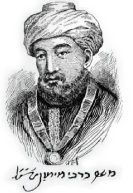
Surprisingly, an utterly imaginative “portrait” has become synonymous with Maimonides forever. How and when did this particular portrait become associated with Maimonides? This and many other intriguing questions regarding this portrait are systematically addressed, and its origins, possible inspiration, and hidden objectives are revealed.
Rasagiline (Azilect) is a highly selective and potent propargylamine inhibitor of monoamine oxidase (MAO) type B. Like other similar propargylamine inhibitors, rasagiline binds covalently to the N5 nitro-gen of the flavin residue of MAO, resulting in irreversible inactivation of the enzyme. Therapeutic doses of the drug which inhibit brain MAO-B by 95% or more cause minimal inhibition of MAO-A, and do not potentiate the pressor or other pharmacological effects of tyramine. Metabolic conversion of the com-pound in vivo is by hepatic cytochrome P450-1A2, with generation of 1-aminoindan as the major me-tabolite. Rasagiline possesses no amphetamine-like properties, by contrast with the related compound selegiline (Deprenyl, Jumex, Eldepryl). Although the exact distribution of MAO isoforms in different neurons and tissues is not known, dopamine behaves largely as a MAO-A substrate in vivo, but follow-ing loss of dopaminergic axonal varicosities from the striatum, metabolism by glial MAO-B becomes increasingly important. Following subchronic administration to normal rats, rasagiline increases levels of dopamine in striatal microdialysate, possibly by the build-up of β-phenylethylamine, which is an ex-cellent substrate for MAO-B, and is an effective inhibitor of the plasma membrane dopamine trans-porter (DAT). Both of these mechanisms may participate in the anti-Parkinsonian effect of rasagiline in humans. Rasagiline possesses neuroprotective properties in a variety of primary neuronal preparations and neuron-like cell lines, which is not due to MAO inhibition. Recent clinical studies have also demon-strated possible neuroprotective properties of the drug in human Parkinsonian patients, as shown by a reduced rate of decline of symptoms over time.
Chronic hepatitis C virus (HCV) infection is a leading cause of liver disease worldwide and remains the most common indication for liver transplantation. The current standard of care leads to a sustained vir-al response of roughly 50% of treated patients at best. Furthermore, anti-viral therapy is expensive, pro-longed, and associated with serious side-effects. Evidence suggests that a poor response to treatment may be the result of a suppressed anti-viral immunity due to the presence of increased numbers and activity of CD4+CD25+Foxp3+ regulatory T cells (Treg cells). We and others have recently identified fi-brinogen-like protein 2 (FGL2) as a putative effector of Treg cells, which accounts for their suppressive function through binding to Fc gamma receptors (FcγR). In an experimental model of fulminant viral hepatitis, our laboratory showed that increased plasma levels of FGL2 pre- and post-viral infection were predictive of susceptibility and severity of disease. Moreover, treatment with antibody to FGL2 fully protected susceptible animals from the lethality of the virus, and adoptive transfer of wild-type Treg cells into resistant fgl2-deficient animals accelerated their mortality post-infection. In patients with HCV infection, plasma levels of FGL2 and expression of FGL2 in the liver correlated with the course and severity of the disease. Collectively, these studies suggest that FGL2 may be used as a biomarker to pre-dict disease progression in HCV patients and be a logical target for the development of novel therapeu-tic approaches for the treatment of patients with HCV infection.
The expanding impact of chronic kidney disease (CKD) due to pandemic diabetes mellitus is recounted emphasizing its epidemiology that has induced global socioeconomic stress on health care systems in industrialized nations now attempting to proffer optimal therapy for end stage renal disease (ESRD). Strategies to delay and perhaps prevent progression of diabetic nephropathy from minimal proteinuria through nephrotic range proteinuria and azotemia to ESRD appear to have decreased the rate of persons with diabetes who develop ESRD. For those with ESRD attributed to diabetes, kidney transplantation affords better survival and rehabilitation than either hemodialysis or peritoneal dialysis. It is likely that advances in genetics and molecular biology will suggest early interventions that will preempt diabetic complications including renal failure.
It has been argued that human evolution has stopped because humans now adapt to their environment via cultural evolution and not biological evolution. However, all organisms adapt to their environment, and humans are no exception. Culture defines much of the human environment, so cultural evolution has actually led to adaptive evolution in humans. Examples are given to illustrate the rapid pace of adaptive evolution in response to cultural innovations. These adaptive responses have important impli-cations for infectious diseases, Mendelian genetic diseases, and systemic diseases in current human populations. Moreover, evolution proceeds by mechanisms other than natural selection. The recent growth in human population size has greatly increased the reservoir of mutational variants in the hu-man gene pool, thereby enhancing the potential for human evolution. The increase in human popula-tion size coupled with our increased capacity to move across the globe has induced a rapid and ongoing evolutionary shift in how genetic variation is distributed within and among local human populations. In particular, genetic differences between human populations are rapidly diminishing and individual het-erozygosity is increasing, with beneficial health effects. Finally, even when cultural evolution eliminates selection on a trait, the trait can still evolve due to natural selection on other traits. Our traits are not isolated, independent units, but rather are integrated into a functional whole, so selection on one trait can cause evolution to occur on another trait, sometimes with mildly maladaptive consequences.