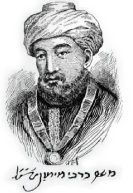
Kallmann syndrome is named after Franz Joseph Kallmann, a German-born psychiatrist who described in 1944 twelve subjects from three families who presented with a syndrome of missed puberty, anosmia, and color blindness. Yet, several other eponyms for the same syndrome can be found in the literature. Despite the fact that Kallmann syndrome is the most recognized eponym, very little is known about the man for whom the syndrome is named. A biographical note on Franz Joseph Kallmann and his historical context is presented.
Jewish medical ethics is arguably the oldest recorded system of bioethics still in use. It should be of interest to practicing nephrologists because of its influence on the ethical systems of Christianity, Islam, and Western secular society; because of the extensive written documentation of rabbinical response in addressing a broad range of bioethical dilemmas; and in understanding the values of patients who choose to adhere to religious Jewish law. The goal of this review is to provide a brief overview of the basic principles underlying mainstream traditional Jewish medical ethics, apply them to common clinical scenarios experienced in nephrology practice, and contrast them with that of secular medical ethics.
A physician is a valued member of society on whom many individuals rely for both professional advice and support during times where they may feel to be at a disadvantage, whether it be physically or mentally. An issue on the rise today concerns the population of smokers in our society. Many are coming to share the opinion that physicians should not provide treatments for smokers. Some of the opinions are based on the claim that smokers are morally responsible for their medical conditions. But, providing care in a fair manner includes not treating differently those who suffer from addiction. Moreover, it is important to recognize that allocating medical resources based on moral responsibility will undermine the physician–patient relationship which is necessary for the practice of medicine. Many countries have codes and policies that physicians must legally follow in terms of providing treatments. With acceptance of the fact that the patient may be unable to execute the decisions made by the physician, it is the legal duty of the physician to provide care and not abandon the patient. An analysis of the many policies around the world brings forward certain changes that must be made in order to make sure that physicians fulfil their legal duty, which is to provide care. As such, this article looks into the existing ethical dilemma in treating smokers around the world, with a review of some policies that will guide our approach in this matter.
The history of medicine has been an intriguing topic for both authors. The modern relevance of past discoveries led both authors to take a closer look at the lives and contributions of persecuted physicians. The Jewish physicians who died in the Holocaust stand out as a stark example of those who merit being remembered. Many made important contributions to medicine which remain relevant to this day. Hence, this paper reviews the lives and important contributions of two persecuted Jewish physicians: Arthur Kessler (1903–2000) and Bronislawa Fejgin (1883–1943).
The author, a practicing physician, was diagnosed with throat cancer and lost his vocal cords. He endured the side effects of radiation, repeated surgeries, and the effects of prolonged hospitalizations; confronted medical mistakes and discrimination after losing his vocal cords; and struggled to regain his speech and find new meaning and purpose for his life. Facing the hardship and trials of becoming a laryngectomee illustrated to him how dependent and helpless a patient can become. Being unable to speak, eat, and breathe normally, while dealing with a potentially terminal illness, makes the patient very vulnerable, both physically and emotionally. A skillful, competent, error-free, empathetic, and caring approach that recognizes what the patient is experiencing can expedite recovery and well-being and help the patient return to a productive and meaningful life.
Objective: Data on the prevalence of patent processus vaginalis (PPV) and hernia in patients with cryptorchidism are controversial. While some pediatric surgeons do not dissect the processus vaginalis (PV), most prefer to do so to prevent hernia formation and to achieve an effective orchiopexy outcome. This study was performed to evaluate the importance of dissection and high ligation of the PV during treatment of undescended testis (UT).
Methods: The clinical findings and surgical procedures of 55 patients with UT were retrospectively investigated.
Results: The mean patient age was 2.5 (range 1.0–12.0) years. Non-palpable testis (NPT) was located on the right and left side in 39 and 16 patients, respectively. Ultrasonography revealed no testis in 10 patients and an atrophic testis in 7 patients. Seven patients had a parent with an inguinal hernia, and the silk sign or a PPV was detected during inguinoscrotal examination in 22 patients. Undescended testis repair was performed by an inguinal approach in all patients. The inguinal canal was opened in all patients; 42 patients had a wider-than-normal internal ring (>2.5 cm), and the posterior wall of the inguinal canal was consequently weakened. Two-stage orchiopexy was performed in 2 patients, and 15 underwent the Prentiss maneuver. In the remaining patients, the dissection was easily done, and the orchiopexy was performed without any difficulty. Scrotal edema and wound infection occurred in five and two patients, respectively. One patient presented with an atrophic testis, and three had recurrent UT. Inguinal hernia was not observed in any of the patients during the study period, and all procedures were performed on an outpatient basis.
Conclusion: High ligation of the PV is an effective method for successful orchiopexy and prevention of inguinal hernia in patients with NPT and UT.
Acrolein is a highly reactive unsaturated aldehyde widely present in the environment, particularly as a product of tobacco smoke. Our previous studies indicated the adverse consequences of even short-term acrolein exposure and proposed a molecular mechanism of its potential harmful effect on oral cavity keratinocytic cells. In this paper we chose to review the broad spectrum of acrolein sources such as pollution, food, and smoking. Consequently, in this paper we consider a high level of oral exposure to acrolein through these sources and discuss the noxious effects it has on the oral cavity including on salivary quality and contents, oral resistance to oxidative stress, and stress mechanism activation in a variety of oral cells.
The use of forward genetics to analyze mammalian biology has been dramatically accelerated by methods that make it possible instantly to determine which mutation causes a phenotype. Now it is possible to discover gene function as rapidly as mutations can be created and screened: approximately 1,000 coding changes per week are interrogated in our laboratory. Moreover, it is possible to know approximately how much damage has been done to the genome over time. We estimate that we have damaged or destroyed about one-quarter of all protein encoding genes and tested the effects of variant alleles within these genes three times or more in a set of phenotypic assays that interest us. Only about two years were required to reach this level of saturation.
Objective: The optimal treatment of deep vein thrombosis (DVT) is anticoagulation therapy. Inferior vena cava filter (IVC) placement is another option for the prevention of pulmonary embolism (PE) in patients with deep vein thrombosis. This is used mostly in patients with a contraindication to anticoagulant therapy. The purpose of the present study was to compare the two options.
Methods: A retrospective cohort study of two groups of patients with DVT: patients who received an IVC filter and did not receive anticoagulation due to contraindications; and patients with DVT and similar burden of comorbidity treated with anticoagulation without IVC insertion. To adjust for a potential misbalance in baseline characteristics between the two groups, we performed matching for age, gender, and Charlson’s index, which is used to compute the burden of comorbid conditions. The primary outcome was an occurrence of a PE.
Results: We studied 1,742 patients hospitalized with the diagnosis of DVT in our hospital;93 patients from this population received IVC filters. Charlson’s score index was significantly higher in the IVC filter group compared with the anticoagulation group. After matching of the groups of patients according to Charlson’s score index there were no significant differences in primary outcomes.
Conclusion: Inferior vena cava filter without anticoagulation may be an alternative option for prevention of PE in patients with contraindications to anticoagulant therapy.
Background: There is a consensus among the halachic authorities that life-saving actions override Sabbath prohibitions. They are painstaking in securing that the sanctity of the Sabbath is maintained but that not a single life be lost.
Objective: This manuscript examines if and when a relative’s presence at the bedside of a seriously ill individual is potentially life-saving against the backdrop of the scientific literature. It specifically addresses the permissibility of traveling in a motorized vehicle, generally prohibited on the Sabbath, to be with one’s relative in hospital for the provision of emotional support.
Methods: Discourse of the halachic issues in the context of the scientific literature.
Results: Stress, mental or physical, has been determined as a potentially life-threatening condition in many disease entities. The literature attests to both the patient’s and the professionals’ perception of the curative potential of the presence of loved ones by advocating for the patient and relieving stress in the hospital experience. Emotional support from a loved one is perceived by some patients as vital to survival. There is halachic consensus that a patient’s perception of the emotional need for a relative’s presence is sufficient to permit overriding rabbinic prohibitions. Torah prohibitions, which may be overridden for medical needs, may be overridden for emotional support, providing a health professional or family member attests to the fulfilment of this specific need as diminishing the danger to the patient’s life. In certain cases, the latter contingency is unnecessary.
Conclusions: Emotional support has an impact on the patient’s health status; the degree to which its impact is strong enough to save life is still being studied. As more data from scientific studies emerge, they may be relevant to sharpening the halachic rulings with respect to the issue at hand.